A regenerative proposal · Edge City India, Mandrem

Ecological superintelligence, starting in Goa

A thesis, a method and a global network, starting with ActforGoa at Edge City India.

Ostara Edge City

With the Regen Goa circle at Edge City India · Mandrem, 14–30 October 2026

Scroll

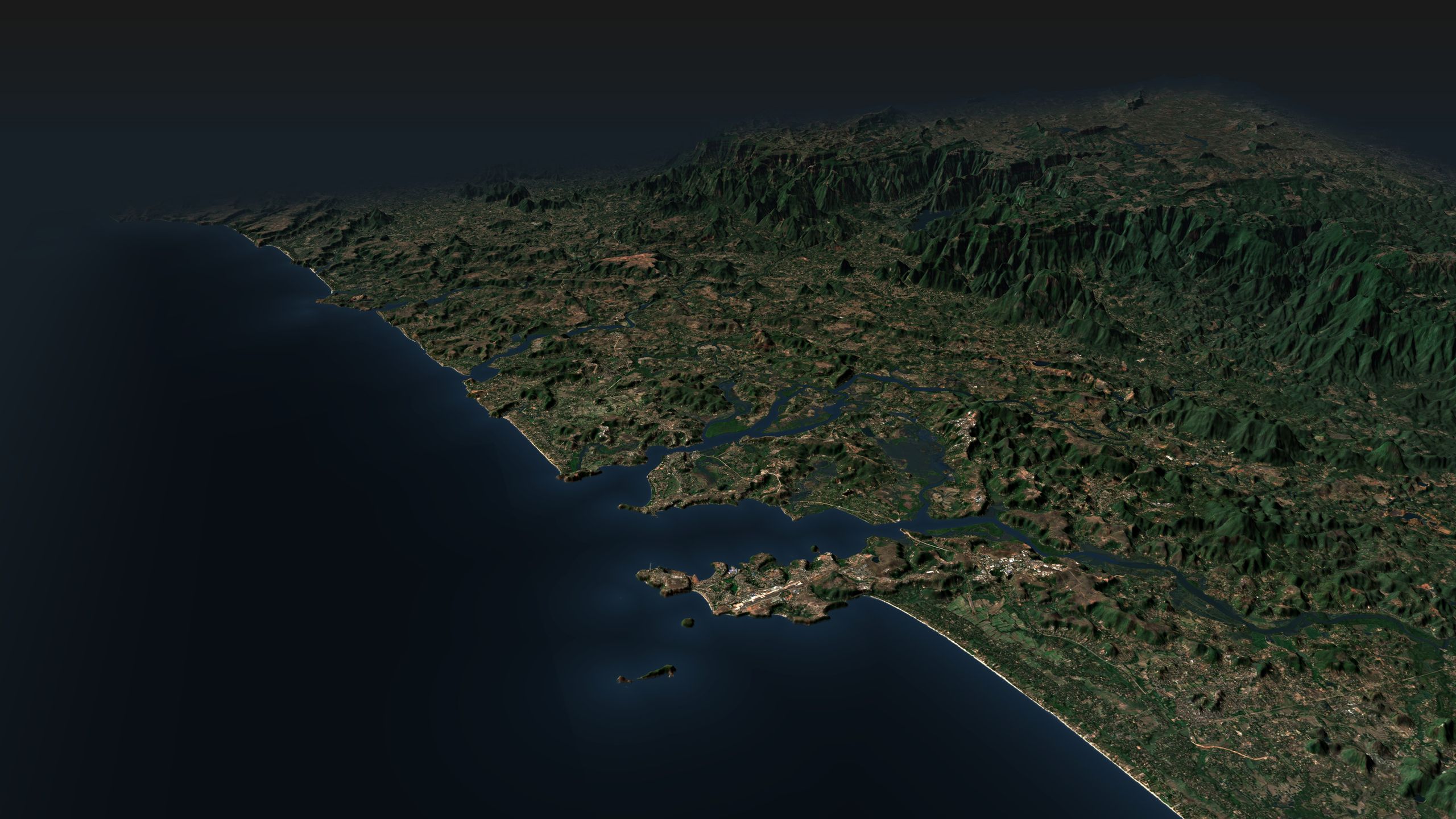
North Goa from the Arabian Sea: a real-data render for the Edge City keynote. Sentinel-2 cloudless by EOX (CC BY-NC-SA 4.0) over Copernicus DEM GLO-30.

The problem · acceleration is not progress

Frontier technology runs inside an economy built to extract and concentrate. So it doesn't change direction. It extracts faster.

The planetary picture

Earth at breaking point.

7 of 9planetary boundaries now crossed
73%average decline in monitored wildlife populations since 1970
425+ ppmCO₂ in the air, up from 280 before industrialisation

All three are still getting worse. In 2024, CO₂ rose faster than in any year on record.

Sources: Planetary Health Check 2025 · WWF Living Planet Report 2024 · NOAA. The chart is schematic. Earth: NASA, Apollo 17.

The root of it

We see ourselves as separate from nature. Economy over here, “the environment” over there. That split is the crisis.

The turn

What if a place could understand itself as one living system, and its people could act as part of it?

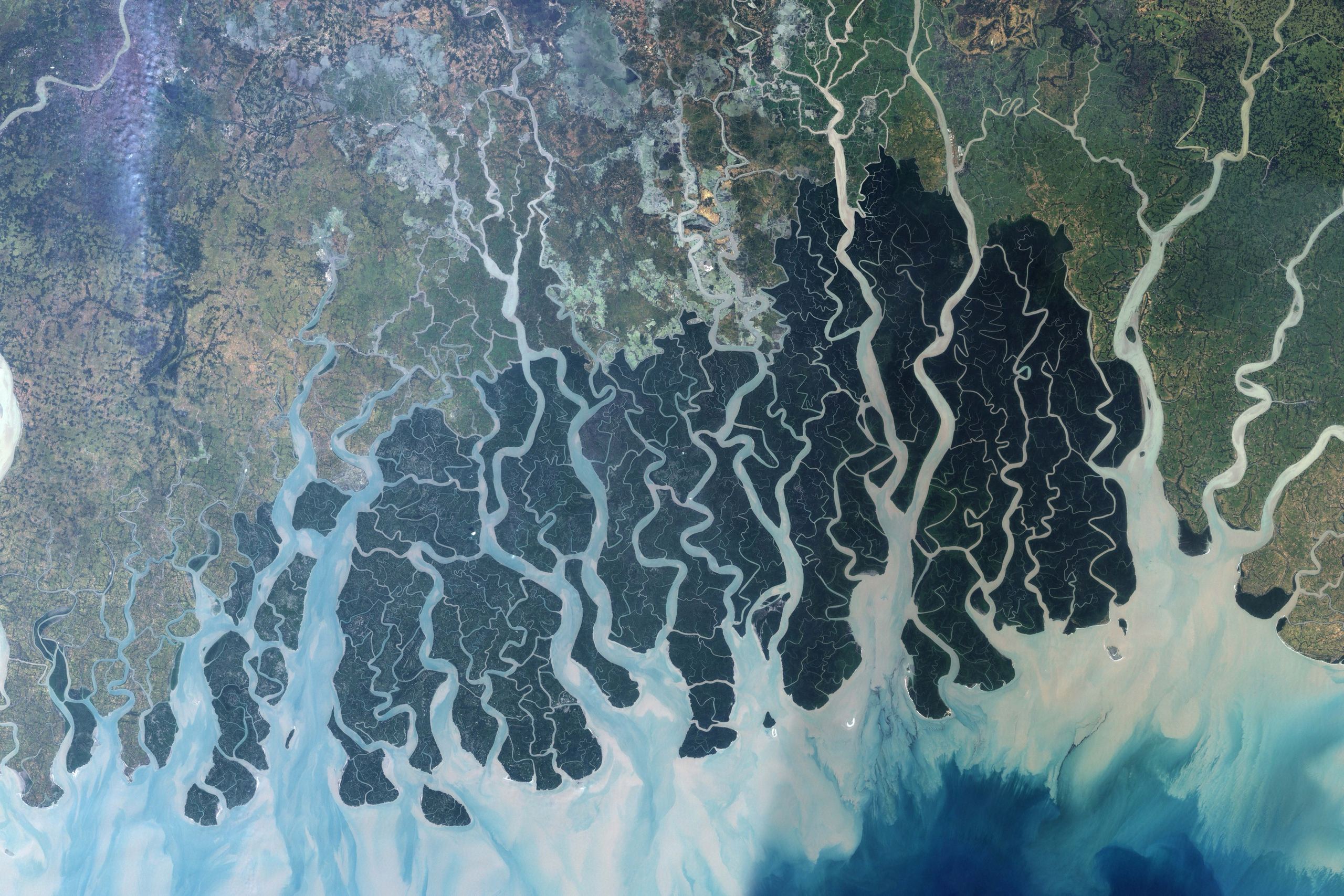
Sundarbans mangrove forest, India and Bangladesh. NASA Earth Observatory (Landsat 7), public domain.

The thesis

Ecological Intelligence Systems

Our cultures, economies, societies and technologies are part of living systems, not separate from them.

  • BiophysicalWhat is happening in the living system?
  • Social & bioculturalWho is part of this place, and what matters to them?
  • EconomicWho depends on this place, who benefits, and who bears the cost?
  • Technological & infrastructuralWhat have we built, and how does it shape the land?

How it works · an intelligent bioregion

How a place comes to know itself

Ecological Intelligence Systems are arrangements of knowledge, people, practices, tools and institutions that help a community sense, interpret, decide about, act within and learn from the living systems it belongs to.

They connect observing, understanding, choosing together and acting into one loop. And that loop is never an optimisation machine: it stays open to participation, rights and new evidence.

Real today Written at Edge: version 0.1 on 15 October, recut for the Edge City keynote on 16 October.

imagine an intelligent bioregion · North Goa, from the Western Ghats to the Arabian Sea
North Goa from the Arabian Sea, real terrain and satellite imagery Layer: the watershed of the Terekhol, Chapora and Mandovi rivers Layer: forests, khazan lands and mangroves Layer: villages and towns Layer: monitoring points Layer: decisions linking villages Layer: resources flowing to where they are needed
  1. Watershed
  2. Ecology
  3. People
  4. Monitoring
  5. Decisions
  6. Resources

Sense, understand, decide, act, then learn. Watershed, ecology and people are real data; monitoring, decisions and resources are illustrative. Render from the Edge City keynote.
The layers of a place's intelligence

Watershedrivers from the Ghats to the sea Ecologyforests, khazans, mangroves Peoplevillages, farmers, fishers, stewards Monitoringcommunity observation, sensors, satellites Decisionspriorities set together Resourcescapital for what the place decides Biophysicalland, water, soil, climate Social & bioculturalhistories, cultures, ways of knowing Economicwho depends, gains and bears the cost Technologicalthe footprint of what we build

The thesis, on the land

Goa. 3,702 square kilometres between the Western Ghats and the Arabian Sea.

Domain 1 · Biophysical

The land, water, soil and climate, and everything that lives in them.

Rivers, estuaries, forests and wetlands. The thesis calls it biophysical, not ecological, because all four domains are ecology.

Domain 2 · Social & biocultural

The villages and towns, their histories, and their bonds with the land.

Who lives here, how they know it, and what they hold.

Domain 3 · Economic

Who depends on the place, who gains from it, and who bears its costs.

Fields, beaches and the land under pressure. It maps relationships, not prices.

Domain 4 · Technological & infrastructural

Roads, railways and airports are part of the place too.

Counting them lets the system see its own footprint.

Ecological superintelligence

A living knowledge graph of a place, which AI can reason across and its people can steer.

What's next The links shown here are illustrative. The data underneath is real.

Ask it about the whole of Goa · example questions

  • Ecological Are the khazan sluice gates still holding back the salt?
  • Social Who remembers where the springs ran before the hills were cut?
  • Economic Who gains from the coastal resorts, and who bears the cost?
  • Technological Who keeps the river gauges and the village server running?
  • Governance Who must the Gram Sabha hear before a hill is cut?

It answers with its evidence, and says what isn't known yet.

Map data © OpenStreetMap contributors (ODbL), via OpenFreeMap. Imagery: Sentinel-2 cloudless by EOX (CC BY-NC-SA 4.0), contains modified Copernicus Sentinel data. Terrain: AWS Terrain Tiles.

Who should own the intelligence of a place?

Not a platform. Not just open code. A commons.

Not proprietary.

Owned by a platform and governed by its shareholders. The value, and the data, flow to investors far away.

Not open source.

Free to copy, and free to extract. Open code doesn't say who decides, or who benefits.

A commons.

Owned and governed by the people of the place. Open tools, not extractive platforms, on infrastructure they hold.

What's next

A global network of ecological superintelligence.

Grown place by place. Not one global platform: a network of place-based commons, each owned by its place, connected through shared standards.

  1. One placeActforGoa's commons, seeded in trust. Today.
  2. GoaGoa's organisations hold it together.
  3. IndiaMore places build their own, and learn from each other.
  4. The worldA network of commons, governing what they share.

What's nextWhere it leads

The ecological singularity.

In AI, the singularity is the moment intelligence starts to improve itself. The ecological singularity is the moment regeneration does: every place that turns makes the next one easier, and the curves of damage bend down, faster and faster. Ecological superintelligence is how we point the first at the second.

  1. AccelerationDamage climbs with every gain in technology. This is where we are.
  2. Tipping pointsReal todaySolar and wind have tipped worldwide. Cheaper than coal in most places, they now spread by themselves.
  3. The turnDamage peaks and starts to fall. Not yet: fossil emissions set a new record in 2025.
  4. The cascadeTipping points set off one another, place by place, and the fall speeds up.

The chart is schematic. Sources: Global Tipping Points Report 2025 · Global Carbon Budget 2025.

Starting in Goa · who this is for

The people already weaving a regenerative Goa

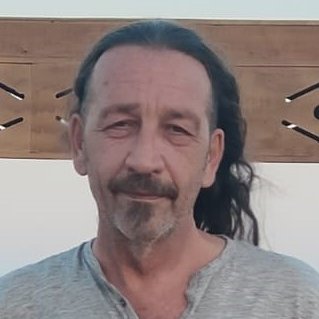
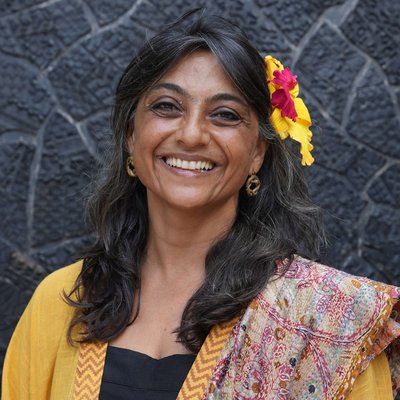
Joanna Pyres
Joanna PyresCo-founder and co-director, ActforGoa
ActforGoa
ActforGoaSeeking to connect and amplify Goa's volunteer civic network, since 2017
Tamer Salameh
Tamer SalamehCo-founder, ActforGoa

Goa has a long history of active citizens caring for its ecological commons and its self-determination. Since 2017, Circlewallas has hosted circles with diverse stakeholders, from village residents to youth, to make their collective intelligence visible and to explore how Goa can safeguard its identity and commons in the face of an extractive economic model. From these dialogues, ActforGoa emerged as a sustainability aggregator: a platform connecting information and people with ways to take part in regeneration, and bridging residents who care with business, government, academia and others to co-create regenerative pathways. Much of what those circles learned still sits on chart paper and in a few people's heads.

Joanna and Tam would be the commons' first stewards. Around them sit ActforGoa's team and collectives, then Goa's civic network, then Goa's land, water and living beings.

“The coordination, the weaving, the connecting requires a lot of time, care, effort and attention, which often is not funded. And so people like me end up doing a lot of it for free… and then you get burnout.”
Joanna PyresJoanna Pyres, co-founder, ActforGoa
“If we can develop a framework which works here… it's the same framework everywhere. Once we have figured that out, we can transport that anywhere.”
Tamer SalamehTamer Salameh, co-founder, ActforGoa

What we built at Edge

The foundations for place-based ecological superintelligence.

Groundwork from 14 October. The method, the final MoU drafts and this site were built during the Buildathon, 28–30 October.

The EIC method · version 0.1

A method any place can start from

The method turns the thesis into a repository a place runs itself: plain files, a full history, and checks that keep private things private. Every finding records whose claim it is, how it came to be known and how far it has been tested.

“AI agents may lower trust; only people raise it.”

Built 28–30 Oct During the Buildathon: 19 of 23 build tasks done. Not yet released.

ecological-intelligence-commons · private
concept/what a commons is, the ladders, the loop
contracts/claims · ids · sensitivity · harvests · versions
agreements/4 templates · 59 clauses · 83 scenarios
jurisdictions/India · European Union
reference/
core/engine, privacy guards, templates, skills
ecological/places, datasets, protocols, the map
commons/harvests and the ladder's records
learning/places register · harvests register
$ python3 ops/test.py engine
Ran 748 tests
OK
the commons ladder
  1. 0 Seeded in trust ActforGoa today
  2. 1 An organisation's garden
  3. 2 A community's commons
  4. 3 A place's commons
  5. 4 A network of commons

A rung is held, not won. It is read from the record, never from intentions.

The memorandum of understanding

Terms first, so nothing is taken

Before anything was built, ActforGoa and Ostara wrote down who owns what, what may flow between them, and how either can step away. Local knowledge has too often been extracted by people who arrive, take it and leave. These terms are written so that can't happen here.

Consent is layered: the closer knowledge comes to a person, or to what a community holds sacred, the firmer the yes it needs, and traditional knowledge of species is never shared.

Real today Seven drafts in nine days, worked through ActforGoa's circle and Ostara's review. Draft 0.7 is under discussion and not yet signed.

MoU · draft 0.7 for discussion
  • 0.1 21 Oct. A discussion draft, shown to ActforGoa's circle.
  • 0.4 22 Oct. An open-ended phase becomes one milestone.
  • 0.5 27–28 Oct. ActforGoa's own clauses and consent rule go in.
  • 0.7 29–30 Oct. A legal gap closed, and the text simplified.

The ActforGoa Ecological Repository

ActforGoa's memory, in one place

The first repository built on the method's design. It already holds ActforGoa's whole website, its documents since 2018 and four research passes, each with where it came from. Meeting notes stay on a local machine until the people in them agree.

Real today Rung 0: a prototype towards an Ecological Intelligence Commons for Goa.

sources/MANIFEST.json
528pages of actforgoa.org, as text
51documents it hosts, 2018–2026
59sources registered with provenance
4research passes: licensing, data sovereignty, federated networks, India and Goa
Stewardseverything, raw notes included
Contributorsthe commons layer
Communitylater
Publicthe field guide

Its first public face · by Zak

A field guide to caring for Goa

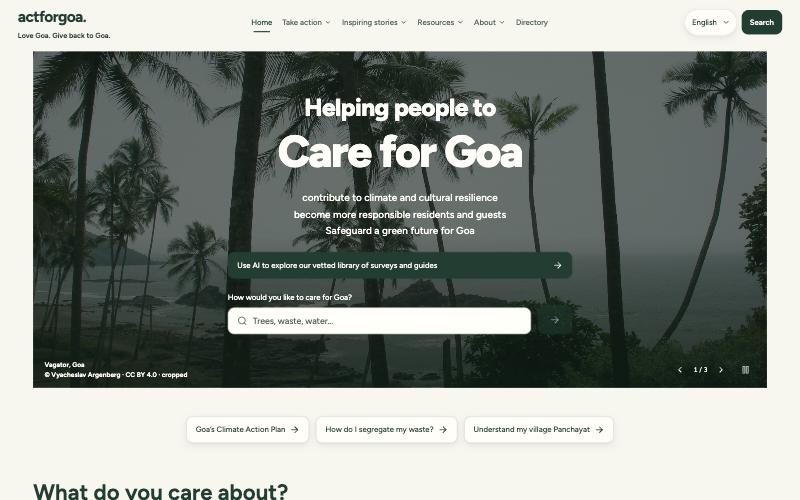
Zak rebuilt ActforGoa's public site during Edge as a field guide: 534 entries, AI answers with citations, three languages and an open MCP server. Joanna built ActforGoa's new organisation page alongside it.

Real today Zak's field guide is entered separately in the Code track.

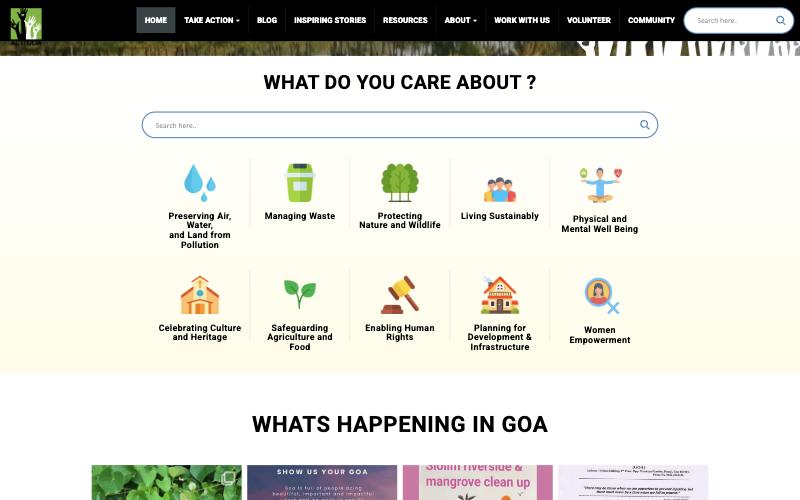
ActforGoa's old website, built in 2018
Zak's ActforGoa field guide
Before · the 2018 site After · Zak's field guide

Drag to compare

How it was made · 19 recorded circles and sessions

Listen first, agree terms, then build, with ActforGoa's people steering at every turn.

  1. 14–19 OctListening
  2. 19–20 OctNarrowing
  3. 21–27 OctTerms
  4. 22–29 OctBuilding
  5. 28–30 OctThe method

· Listening

The real problem surfaced

  • The first circle's first act was consent: everyone present agreed to seed a commons with their names and ideas.
  • Joanna named the bottleneck: writing up one circle takes two or three days, and ActforGoa holds ten years of them. That became the core of the design.
  • Participants warned that public watershed data had once helped speculators buy land. Data about place became sensitive by default.

· Narrowing

One organisation first

  • Adoption decides success, so the work narrowed from a whole-bioregion commons to ActforGoa's own memory, with Goa's commons as the path.
  • Carbon credits were set aside after strong scepticism in the circle, and the circle asked for terms before anything was built.

· Terms

Written with ActforGoa, not for it

  • Seven MoU drafts in nine days, reviewed by ActforGoa's circle and trustees and by Ostara.
  • ActforGoa's own rule went in: a decision goes ahead when neither side has a reasoned objection.
  • ActforGoa got its own GitHub organisation, so its data stays its own.

· Building

The circle kept steering

  • Citizen information came first: snakes, RTI requests, village assembly dates.
  • Konkani was called essential, so the field guide went multilingual, tested by local residents.
  • A “watchdog” reporting tool was reframed around giving back to Goa.
  • Access tiers followed: stewards see everything, contributors the commons, the public the field guide.

· The method

Goa's terms became the method

  • The agreed draft became the method's agreement template, so each next place starts from what Goa agreed.
  • The method was built step by step during the Buildathon, and reviewed for any way private knowledge could slip out.

Groundwork at Edge City India from 14 October. The method, the final MoU drafts, this site and the video were built during the Buildathon, 28–30 October.

Monty Bryant

Who's behind it

Monty Bryant, with Ostara

Monty wrote the Ecological Intelligence Systems thesis and is building the EIC method as Ostara's Digital Transformation Lead. Monty has spent five years working on how money and coordination can serve life: co-founding ReFi DAO, and working with Regen Coordination, the Localism Fund and Celo Public Goods.

Ostara

Ostara is a UK social enterprise whose mission is to catalyse an economy in service of life. It holds the EIC method and develops it with places like Goa, so each place keeps what makes it its own.